Learning to See: What Is Your Soil Test Really Telling You?
By Kathleen Groppe
When I first entered regenerative agriculture, I approached soil the same way I had approached science throughout my career—as a molecular biologist. If I wanted to understand something, I measured it.
So I embraced soil testing.
I collected traditional soil fertility analyses. I ordered Haney Tests. I sent samples for PLFA analysis. I learned microscopy. Before long, I had shelves of three-ring binders filled with laboratory reports.
The problem wasn’t that the tests were wrong.
The problem was that I didn’t yet understand the questions each test was designed to answer.
Like many newcomers to regenerative agriculture, I was searching for one perfect soil test that could explain the health of a living soil system.
That test doesn’t exist.
Instead, every soil test reveals a different piece of the story. The challenge—and the opportunity—is learning how those pieces fit together.
Once I understood that, I stopped asking, “Which soil test is best?”
Instead, I began asking,
“What question am I trying to answer?”
That simple shift changed the way I look at soil.
Begin with Observation
Before collecting a soil sample or mailing a box to a laboratory, walk into the field.
Look.
Healthy soil tells a story long before it reaches a laboratory.
What color is the soil?
Does water infiltrate after a rainstorm, or does it pond on the surface?
Are there earthworms?
How deep do plant roots grow?
Does the soil crumble into stable aggregates or break into hard clods?
Can you smell the rich, earthy aroma that often accompanies active microbial communities?
No laboratory test can replace careful observation. Every soil test should begin—and end—with spending time in the field.
Question: What is the landscape telling me?
Measuring Physical Function
Sometimes our eyes need a little help.
Simple field tests can reveal how well soil performs some of its most important physical functions.
Infiltration tests show how rapidly rainfall enters the soil.
Slake tests demonstrate whether aggregates remain stable when exposed to water.
Bulk density and penetrometer measurements help identify compaction that may restrict root growth, water movement, and gas exchange.
These tests tell us how well the soil functions as a physical environment for life.
Question: How well does this soil capture water, support roots, and provide habitat for the organisms living within it?
Traditional Soil Fertility Tests
Traditional soil tests remain among the most valuable tools available to farmers and ranchers.
They measure nutrient availability, pH, organic matter, cation exchange capacity, and other chemical properties that influence plant growth.
These analyses answer critically important questions.
Do nutrient deficiencies exist?
Is the pH appropriate for the crops being grown?
Are additional nutrients likely to improve production?
These tests have guided agricultural management for generations.
However, they were never designed to measure biological activity.
Question: Does the soil contain the chemical resources needed for healthy plant growth?
Biological Indicators
Healthy soil depends not only on the nutrients it contains but also on the organisms responsible for cycling those nutrients.
Measurements such as soil respiration, active carbon, microbial biomass, enzyme activity, and the Haney Soil Health Test begin to evaluate those biological processes.
Rather than asking what nutrients are present, these assessments ask whether the living soil community is actively transforming carbon and nutrients into forms that plants can use.
Question: How active is the living soil system?
Looking at the Microbial Community
As my understanding of soil ecology grew, I became fascinated by methods that allowed me to look more closely at the organisms themselves.
Microscopy, a cornerstone of the Soil Food Web Foundation’s educational approach, allows us to observe bacteria, fungal hyphae, protozoa, nematodes, and other members of the soil food web directly. Few experiences are more powerful than seeing these organisms with your own eyes.
PLFA analysis takes a different approach. Instead of observing individual organisms, it estimates the relative abundance of major groups of living microorganisms based on the phospholipids found in their cell membranes. Together, microscopy and PLFA provide complementary perspectives on the structure of the microbial community.
Question: Who makes up the living community beneath our feet?
DNA Sequencing
Modern molecular techniques allow us to look even deeper.
Using DNA sequencing, scientists can identify thousands of bacterial, archaeal, fungal, and other microbial taxa within a single soil sample—including organisms that cannot be cultured in the laboratory.
Perhaps even more exciting, emerging technologies are beginning to reveal not only who is present, but what metabolic functions those organisms may be capable of performing.
As someone trained in molecular biology, I find these technologies fascinating. Yet they have also taught me an important lesson.
Knowing who is present does not necessarily tell us how the living system functions.
Question: Who is there, and what might they be capable of doing?
No Single Test Can Explain a Living System
For years, I carefully filed soil test reports into three-ring binders, convinced that one more analysis might finally explain my ranch.
Today those binders sit on my shelf as reminders of an important lesson.
Every one of those tests was valuable.
Every one answered a different question.
None could explain the remarkable complexity of a living ecosystem by itself.
Healthy soil is not defined by one laboratory result, one score, or one management practice. It emerges from relationships among plants, microorganisms, minerals, water, air, and the countless interactions that connect them.
Perhaps the greatest lesson I have learned is this:
The purpose of soil testing is not to find one perfect answer. It is to help us ask better questions.
When we learn to integrate observation with physical, chemical, biological, and molecular measurements, we begin to see what no single test can reveal.
We begin to see the living system.
Guest Author Bio
Dr. Kathleen Groppe is a molecular ecologist, regenerative rancher, and educator whose work bridges soil biology, ecology, and agricultural systems. She holds a Ph.D. in Molecular Ecology from the Universität Basel in Switzerland and earned both Bachelor’s and Master’s degrees in Cell and Molecular Biology from the University of California, Santa Barbara, where she conducted research on the genes involved in avocado ripening.
Kathleen grew up on a small avocado ranch near San Diego, California where she raised a pig for Future Farmers of America (FFA). Her father was an ornithologist (who spent his career restoring the peregrine falcon, an endangered species, to the wild), her step-father was an entomologist (who studied the evolution of the tsetse fly over continents), and her mother was, and is, a master gardener and long-time volunteer at the San Diego Museum of Natural History.
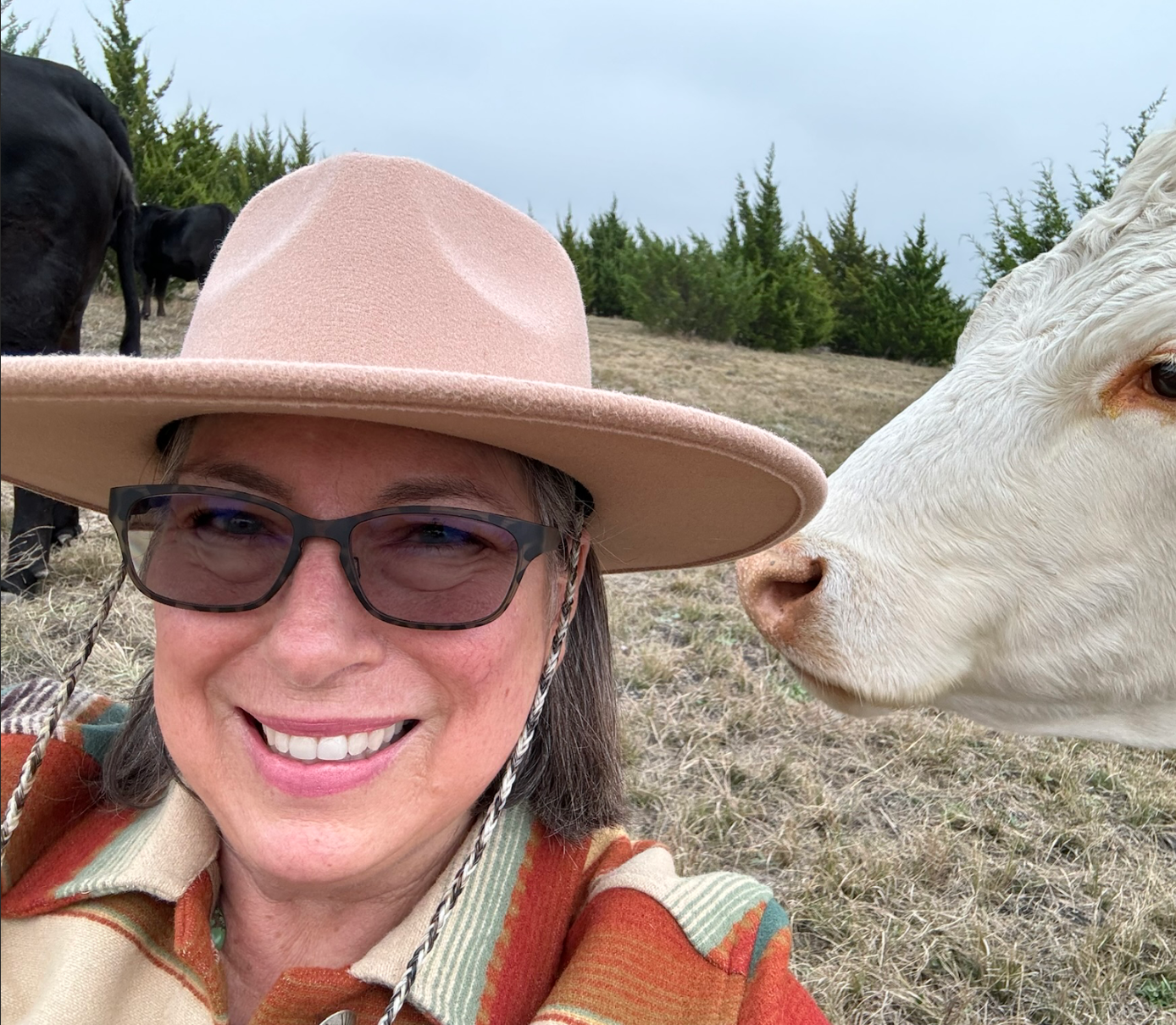
Connect with Dr. Kathleen Groppe on LinkedIn: https://www.linkedin.com/in/kathleen-groppe-48a907bb/
Kathleen’s scientific background includes research in molecular biology, medical diagnostics, and microbial ecology. Over time, her interests shifted increasingly toward soil ecology, plant–microbe interactions, ecosystem restoration, and regenerative land management.
Dr. Groppe currently owns and manages a 77-acre regenerative cattle ranch in North Texas that has undergone extensive prairie and wetland restoration. Her work on the ranch has included observational and applied studies examining soil structure, biodiversity, hydrology, and the effects of management practices on ecological recovery and resilience
Drawing from both scientific training and hands-on land stewardship, Soil as a Living System integrates microbiology, ecology, hydrology, and agricultural systems into a unified framework for understanding soil function. Her work emphasizes systems thinking, ecological feedbacks, and the importance of context in interpreting agricultural outcomes.
In addition to her scientific and agricultural work, Dr. Groppe was a homeschool teacher for13 years, and is a longtime artisan jeweler and small business owner whose work reflects a deep connection to natural systems and landscape.
https://www.kathleengroppe.org/
Connect with Kathleen on LinkedIn: https://www.linkedin.com/in/kathleen-groppe-48a907bb/